Understanding maintenance charges in an apartment is essential for every homeowner and tenant. These recurring payments often feel confusing, but knowing what they cover helps you see the true value they add to your living experience. Let’s break down what maintenance charges really include and why they matter.
What do maintenance charges include in a housing society
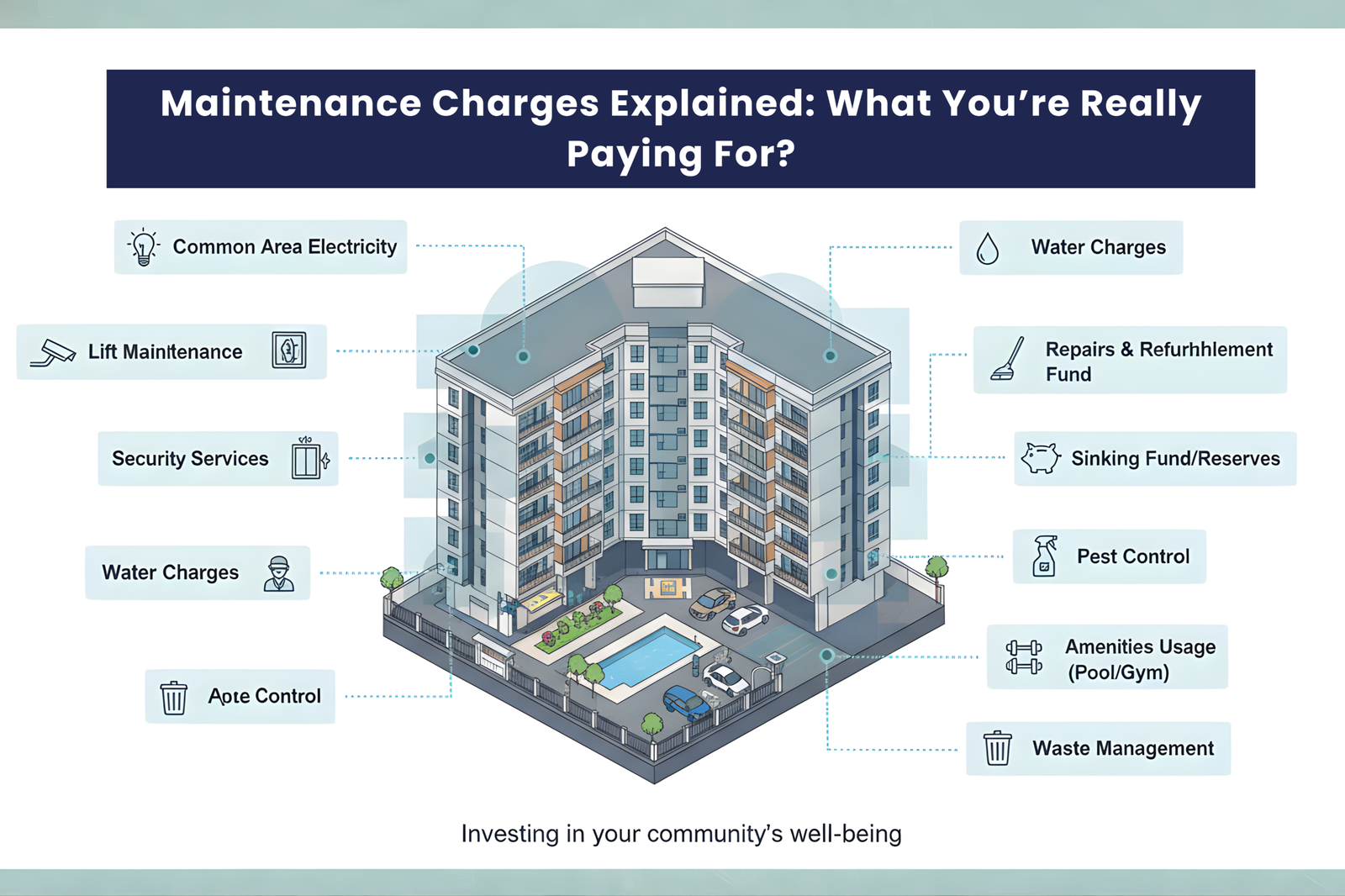
In most residential societies, maintenance fees go toward the upkeep of shared spaces and essential services that keep the building functional and comfortable. This includes common area maintenance, housekeeping, water supply, elevator servicing, sanitation, and security staff salaries. These costs ensure that daily operations run smoothly and safely, something many residents overlook until an issue arises.
According to government guidelines, societies must use these funds strictly for community-related upkeep and transparent accounting.
Here are the key cost components of apartment maintenance, explained clearly and concisely:
Common Cost Components of Apartment Maintenance
- Security & Manpower Costs
Salaries for security guards, housekeeping staff, gardeners, and supervisors. - Electricity (Common Areas)
Power for lifts, staircases, parking lights, corridors, clubhouses, and common facilities. - Water Supply & Management
Municipal water charges, borewell operation, water tankers, pumps, and water treatment. - Lift Operation & Maintenance
AMC (Annual Maintenance Contract), electricity usage, servicing, and emergency repairs. - Housekeeping & Cleaning
Cleaning of common areas, waste collection, disposal services, and consumables. - Repairs & Maintenance Fund
Day-to-day repairs, plumbing, electrical fixes, painting, and minor civil work. - Amenities Maintenance
Upkeep of gym, swimming pool, clubhouse, play areas, gardens, and sports facilities. - Administrative & Management Costs
Society management fees, accounting, audits, legal compliance, and office expenses. - Insurance & Compliance Charges
Building insurance, fire safety compliance, lift inspection fees, and statutory renewals. - Sinking / Reserve Fund
Long-term fund for major repairs like waterproofing, structural work, repainting, or lift replacement.
Modern housing societies also use maintenance charges to manage amenities like gyms, clubhouses, parking areas, and landscaped gardens. These shared facilities require regular maintenance, repairs, and electricity to remain functional. Without these contributions, the society would struggle to preserve long-term property value.
Multiple reports highlight that proper maintenance directly increases property lifespan and resale value.
Ultimately, maintenance charges are an investment in your comfort, safety, and asset value. When used responsibly, they ensure better living standards and protect your property in the long run.
How RERA defines maintenance charges
RERA Rules and GST Breakdown
RERA mandates transparency: Real estate developers must detail costs in a dedicated account, with sinking funds for major repairs only. Late payments? Penalties apply, but demand itemized bills for fairness. GST kicks in at 18% if charges top ₹7,500 monthly—vital for upscale societies in Mumbai or Bangalore.
Stop overpaying blindly! Review your society’s breakdown today, question hikes, and consult RERA for rights. Secure your home’s value, demand clarity now!